
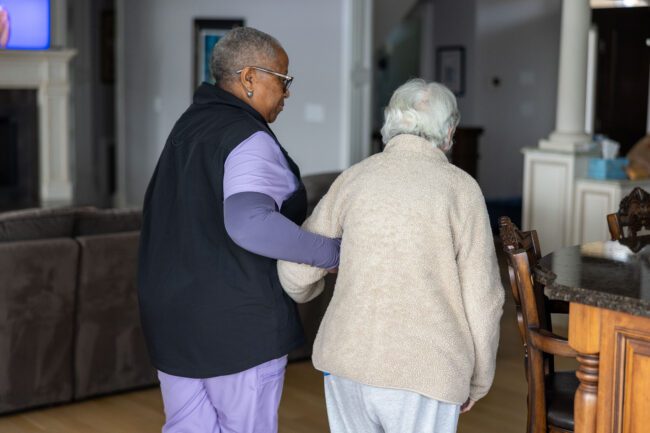
 Home health has always started somewhere small. A single nurse. A single patient. A belief that the best care happens in the place a person calls home.
At Croí Health, that origin is not just history, it is the foundation of how we work. And when we look at what has sustained home health as a field, through decades of change and challenge, one truth is consistent: it has largely been women who have shown up to do this work. As nurses, aides, social workers, and care coordinators. As the clinicians who drove through blizzards to reach a patient, who kept working through a pandemic, who sat with a grieving family at the end of a long shift and found the words anyway.
This is a post in honor of Women’s History Month and in celebration of those women: the professionals who chose this field, and the strength it takes to stay in it. It is also for the families they serve: the daughters and wives and sisters who are often the ones making care decisions, navigating an unfamiliar system, and carrying more than they expected. Because the resilience in home health does not belong only to the clinicians. It lives in the families, too. And the most meaningful thing an award winning home health team can do is meet both.
From One Nurse to a Movement: Women at the Heart of Home Health
The history of home-based care in the United States is, in large part, a history of women. From the visiting nurses of the early 20th century who brought medical care directly into the homes of patients who had no other access, to the CNAs and hospice workers and care coordinators who make up the backbone of the industry today, women have been the consistent, driving force behind care delivered where it matters most.
That is still true. Women make up the overwhelming majority of the home health workforce from nurses and aides to social workers, therapists, and coordinators. They have built the relational, patient-centered model that makes home health distinct from every other care setting. This is not incidental. The field has been shaped by how women approach care: with attention to the whole person, to the family system, to the emotional and not just the clinical.
Croí Health’s legacy is no different. We started with one nurse and a conviction that families on the South Shore of Massachusetts deserved skilled, compassionate care in the comfort of their own homes. That founding instinct that is small, relationship-first, and built on trust, still defines who we are.
What Resilience Looks Like in Home Health
Resilience is a word that gets used often and defined rarely. In home health, it looks like a nurse who checks the weather forecast before her shift, not to decide whether to go in, but to figure out how early she needs to leave. It looks like a hospice aide who has sat with more families in grief than she can count, who knows how to be present in a way that requires no words, and who will do it again tomorrow. Like calling a family back after hours because something felt off and it was worth checking. Like being, for some patients, the most consistent and trusted presence in their lives.
The needs that home health addresses have always been there and will always be there. Illness does not pause for blizzards. Grief does not wait for convenient timing. Aging does not slow down because a family is not ready. The women who have built careers in this field understand that, and they have built their resilience around it, not despite it.
The Emotional Core of the Work
Being Present Through Loss
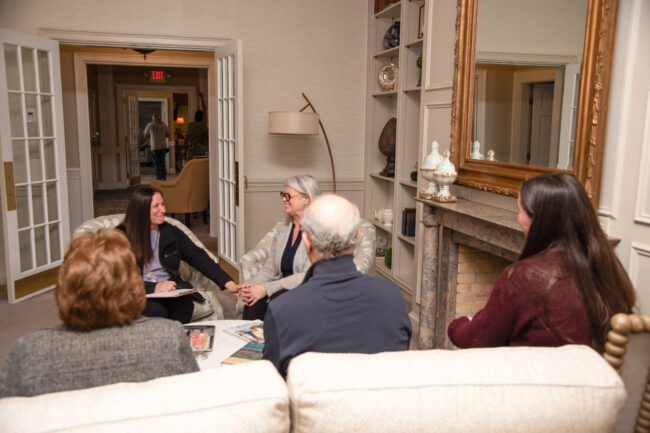
Home health clinicians, particularly those working in hospice and long-term care, are with families during some of the most significant and painful experiences of their lives. They are present for the difficult conversations, the hard decisions, the quiet last days. They hold clinical responsibility and emotional attunement at the same time which means knowing when to speak and when to simply stay.
Compassion fatigue is a real and recognized challenge in this field. The fact that so many skilled women in home health continue to bring their full selves to this work — year after year, patient after patient — is a form of professional resilience that deserves far more recognition than it typically receives.
Grief as Part of the Job
Home health clinicians build real relationships with patients and families, often over months or years. When a patient dies, the loss is felt. When a family they’ve guided through a difficult diagnosis reaches the other side, there is something meaningful in that too. This emotional range includes grief, gratitude, and everything in between. It is part of the job in a way that is unlike most other healthcare settings.
The women who stay in this field do so knowing this. Their resilience is not the absence of feeling. It is the capacity to keep feeling, keep showing up, and keep providing care that is genuinely personal.
Navigating Complexity with Families
Home health rarely involves a single patient in isolation. It involves families with their own dynamics, their own fears, their own histories and disagreements about what is best. Social workers, nurses, and care coordinators in home health are skilled at meeting families where they are: facilitating conversations, helping navigate difficult decisions, and making space for the emotions that come with watching someone you love need more care than you can give alone.
This is clinical skill. It is also deeply human work. And it is, again, work that women in home health have been doing with extraordinary competence for a very long time.
The Women Making Care Decisions and What They Need
The women who work in home health and the women who seek it out are, in many cases, shaped by the same reality: care decisions in American families fall disproportionately to women. Research consistently shows that women are the primary decision-makers when it comes to healthcare for themselves, their children, their aging parents, and their partners. They are the ones researching options, making calls, attending appointments, and asking the hard questions.
When a family is navigating a loved one’s need for home health care, almost 80% of the decision makers coordinating that process are women. That could mean skilled nursing after a hospitalization, ongoing support for a chronic condition, or hospice care at the end of life. She is managing something she may have no previous experience with, while also managing her own grief, her own schedule, and often the emotional needs of the rest of her family.
What she needs from a home health partner is not just clinical competence, though that is essential. She needs someone who will communicate clearly and honestly. Who will treat her as a partner in her loved one’s care, not a bystander to it. Who will help her understand what is happening and what comes next, and who will be there when she has questions.
Croí Health was built with this in mind. Our team understands what families are carrying, because we see it every day. And we know that supporting a patient well means supporting the people around them too.
The Gift of Being Present
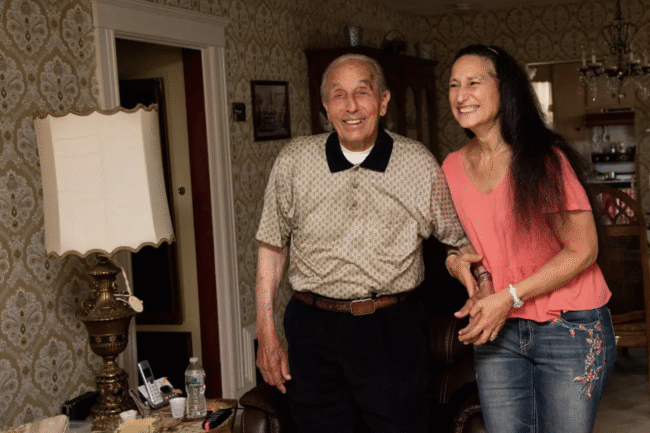
One of the things we hear most often from families who have worked with Croí Health is some version of the same sentiment: “It was such a gift to just be his wife.” Or: “For the first time in months, I could just be her daughter.”
This is what skilled home health care makes possible. Not just clinical management, but the restoration of relationships. When a Croí Health nurse walks into a home and says, “Go sit down, I’ve got this,” she is doing more than completing tasks. She is giving a family member permission to step out of the caregiver role and back into the one that cannot be replaced: the role of someone who loves this person.
In long-term and end-of-life care especially, the time a family has is finite. Whether that time spans months or years, what it looks like matters. There is a profound difference between spending those hours managing logistics and spending them being present — talking, remembering, holding hands, saying what needs to be said.
A social worker who facilitates a family meeting to align on care decisions is doing the same thing. She is lifting something so the family can put it down and be with each other.
That is the heart of what Croí Health does. And it is, at its core, what the women who built this field have always understood: that care, done well, creates the conditions for love to do its work.
Honoring the Women of Home Health
Home health has always started with one person deciding to show up. One nurse. One aide. One social worker who took a call she didn’t have to take and stayed longer than her shift required. Multiply that by every clinician who has built a career in this field, and what you have is something extraordinary: a profession that has quietly, consistently, and largely without fanfare sustained some of the most important work in healthcare.
We are grateful for every woman who has contributed to that work — at Croí Health and across the field. For the ones who trained for this and the ones who found their way here unexpectedly. For the ones who are early in their careers and the ones who have decades of wisdom in how they move through a patient’s home. For the ones currently in the middle of a hard shift, and for the family members who are in the middle of a hard season and doing their best.
You are seen. What you do matters. And we are honored to do this work alongside you.
Whether you’re navigating a loved one’s care for the first time or looking for a home health partner you can trust, Croí Health is here. Learn how our team supports patients and families across the South Shore, with the clinical skill and human care that this work deserves.
